How to Regulate Hydraulic Pressure With an In-Line Adjustable Variable Flow Control
2026-07-03Do you want a more efficient hydraulic system? A single valve makes a huge difference. When you need a reliable control valve, you must fully understand your choices. This comprehensive guide explains the adjustable variable flow control valve. It covers the highly useful hydraulic in-line adjustable variable flow design and standard NPT connection ports. We will discuss the magic of reverse flow, the necessity of pressure control, and how pressure control valves keep your workers safe. You will learn about specialized models like the summit hydraulics hydraulic in-line adjustable unit and explore the broader hydraulics hydraulic in-line adjustable variable category. We will show you exactly how to regulate forces, why regulating hydraulic systems is vital for success, and how a quality hydraulic valve handles extreme hydraulic pressure. Finally, we will uncover why valves use specific internal shapes to get the job done. Stop dealing with bad suppliers and machine breakdowns. Learn the facts today!
What exactly is an adjustable variable flow control valve?
Every piece of heavy machinery needs a way to manage speed. A valve is the simplest answer to this problem. Specifically, an adjustable variable flow control valve manages the speed of a moving part. It acts exactly like the gas pedal in your car. It changes the flow rate of the liquid pushing the metal. When you twist the adjustment knob, you make the internal opening larger or smaller.
This specific tool is a highly effective type of flow control valve. It allows you to regulate the speed of your equipment smoothly and safely. Why is this so important? If a heavy excavator arm moves too fast, it will smash into a truck and break things. If it moves too slow, you lose money because the job takes twice as long. You need an adjustable solution to find the perfect speed.
Many factory buyers struggle to find good replacement parts. You might buy a valve from a brand new supplier to save a few dollars, but it cracks and leaks in a week. Quality truly matters here. A well-made control valve has incredibly strong internal seals. It does not leak under heavy strain. It gives the operator the power to control the flow perfectly. This precision control is exactly what separates great machinery from frustrating machinery. It gives you precise control over every single tiny movement.
When Mark, a procurement manager, calls a factory in China, he always asks about the lifespan of the seals. The body is usually made of strong steel or brass. If the metal is weak, the high force of the liquid will tear it apart. Always insist on high-grade materials.
How does an in-line adjustable variable flow control valve work?
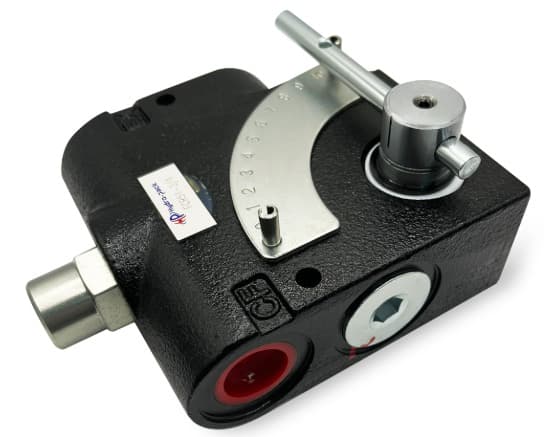
Space on a factory machine is often very tight. An in-line adjustable variable flow control perfectly fixes this space issue. It installs directly onto the flexible hose or rigid pipe. You do not need a giant metal block to mount it. A hydraulic in-line adjustable variable flow unit is very small and compact.
Inside the metal body, it has a tiny spool or a sharp needle. When you turn the handle on the outside, the needle moves down inside. This restricts the flow of fluid. It acts as a powerful restrictor. The fluid within the pipe must squeeze through a tiny, tight gap. The flow within this space is highly restricted. This friction slows down the actuator on the other end.
A common connection style used globally is the NPT thread. National Pipe Thread (NPT) is the gold standard in the USA. It creates a very tight, leak-proof seal. When connecting an NPT hydraulic valve, you just screw it directly onto the threaded pipe with a wrench. It is very simple to install.
This hydraulic in-line adjustable variable flow setup is highly reliable for daily use. It manages the fluid flow safely and quietly. You get a quick response from the machine when you adjust the knob. For buyers, finding a factory that cuts these threads perfectly is quite hard. Bad threads cause immediate oil leaks. You must ask your overseas supplier about their threading tools and testing processes. Installation time is money. A bulky part takes hours to mount, but an in-line design goes on in minutes.
Why do valves use reverse flow in the opposite direction?
Heavy machines need to push forward and pull backward constantly. Sometimes, you only want to slow down one of those movements. This is exactly why many valves use a smart internal trick. They manage reverse flow in a very clever way to save time.
Let us look at a real example. Imagine a large hydraulic press stamping metal car parts. The heavy press pushes down slowly and carefully. This requires the needle to restrict the oil. But when the stamp goes back up, it must go up as fast as lightning. A single unit can provide flow control and shut-off. Sometimes you need a component used to provide flow control going forward, but you also need control and shut-off in one device.
These components allow fluid to travel in one direction with free reverse motion. This means the valve gives you shut-off in one direction while allowing reverse flow in the opposite path. This flow in the opposite direction helps retract a cylinder quickly. It bypasses the needle entirely. This action is essential for a fast hydraulic circuit. If the oil had to squeeze backward through the same tiny needle hole, the press would take five minutes to go up. You would lose hundreds of parts per hour.
What are the main types of hydraulic valves?
If you buy parts for a living, you must absolutely know the types of hydraulic valves. There are many different types of valves. Each one does a completely different job. You cannot use a flow control valve if you actually need to stop high pressure.
First, we have the directional control valve. This steers the liquid left or right. Second, we have pressure management valves. These manage the brute force. Third, we have the flow control valve. This manages the speed of the travel.
Some basic valves have two ports. They are simple on/off switches, like a light switch. Some valves have three ports. They can divert oil to one of two different places. Some complex valves have four ports. These usually drive a double-acting actuator. A double-acting ram needs pressure to push out and pressure to pull back in.
You might also hear engineers talk about servo valves or proportional valves. These use an electrical input signal to adjust themselves automatically. They are heavily used in industrial automation plants. A computer sends a signal, and it tells them exactly how wide to open. Often, systems also use a solenoid valve for instant electrical control.
How does a directional control valve differ from a control valve?
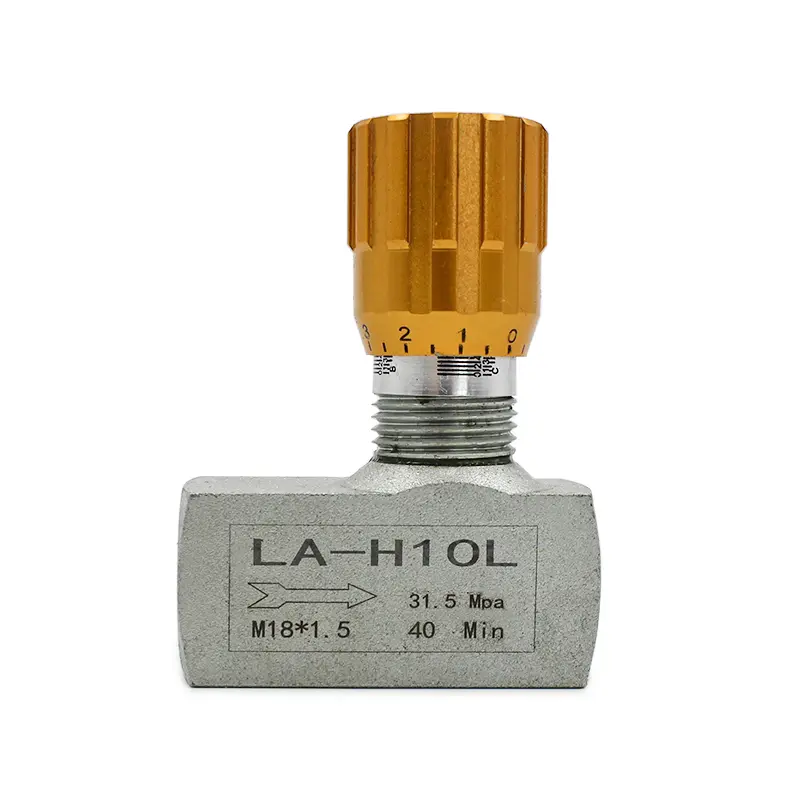
A standard control valve simply manages how much liquid moves through a pipe. A directional control valve manages exactly where that liquid goes. It provides steering. It controls the actual direction of hydraulic fluid.
Inside the metal body, it usually has a spool. Spool valves have a cylindrical metal piece carved with deep grooves. As the spool slides back and forth, it opens and closes different internal paths. It can direct hydraulic fluid to the front of a heavy ram, pushing it outward. Then it slides, sending oil to the back, pulling the ram inward.
These tools offer complete directional control over the entire machine. Without them, a farm tractor could not lift its front bucket. A construction crane could not swing side to side. They determine the main flow of hydraulic energy. A hydraulic valve like this is the true brain of the motion system.
Sometimes, a machine uses spinning hydraulic motors. The directional tool tells the motor which way to spin. Sourcing these requires extreme care. If the spool is not machined perfectly straight, oil bypasses it internally. Your machine will drift. It will slowly drop its heavy load over time. This internal leaking is a clear sign of poor, cheap machining.
Why is regulating hydraulic pressure critical in a hydraulic system?
Raw power is dangerous if you cannot tame it. Regulating hydraulic force is mostly about human safety. In a hydraulic system, large pumps create continuous flow. Resistance to that fast flow creates extreme fluid pressure. If the pressure gets too high, rubber hoses will explode like balloons.
You absolutely need a safe pressure limit. If a load is too heavy, the pressure level spikes instantly. A good safety tool opens up and lets the excess fluid escape safely back into the storage tank. This protects the expensive pump and the workers standing nearby. This is exactly why relief valves are mandatory on every machine. They act as mechanical safety fuses.
When you regulate the power correctly, you also save a lot of energy. The system does not work harder than it actually needs to. A single valve controls this delicate balance perfectly. If you are a B2B buyer, never buy cheap, unverified relief parts. A failed safety part destroys the whole machine. Pressure drops within the system can be fatal to performance. Think of a garden hose with the nozzle shut tight. The water pushes hard against the rubber. If the hose is old, it bursts. Heavy machinery works exactly the same way, but with oil that is thousands of times stronger.
How do pressure control valves maintain pressure levels?
There are several specialized tools built just for this job. Pressure reducing valves lower the force in one specific part of the hydraulic layout. Maybe your main line runs at a dangerous 3000 PSI, but one small clamping tool only needs 500 PSI. The reducing tool drops the force just for that single clamp without affecting the rest of the factory.
Then we have sequence valves. These make sure different actions happen in a very specific order. For example, a metal clamp must close tightly before a drill starts moving downward. The sequence tool will maintain pressure until the clamp is fully tight, then it opens to move the drill. Tools like Direct Acting Sequence Valves are perfect for these staged, step-by-step operations.
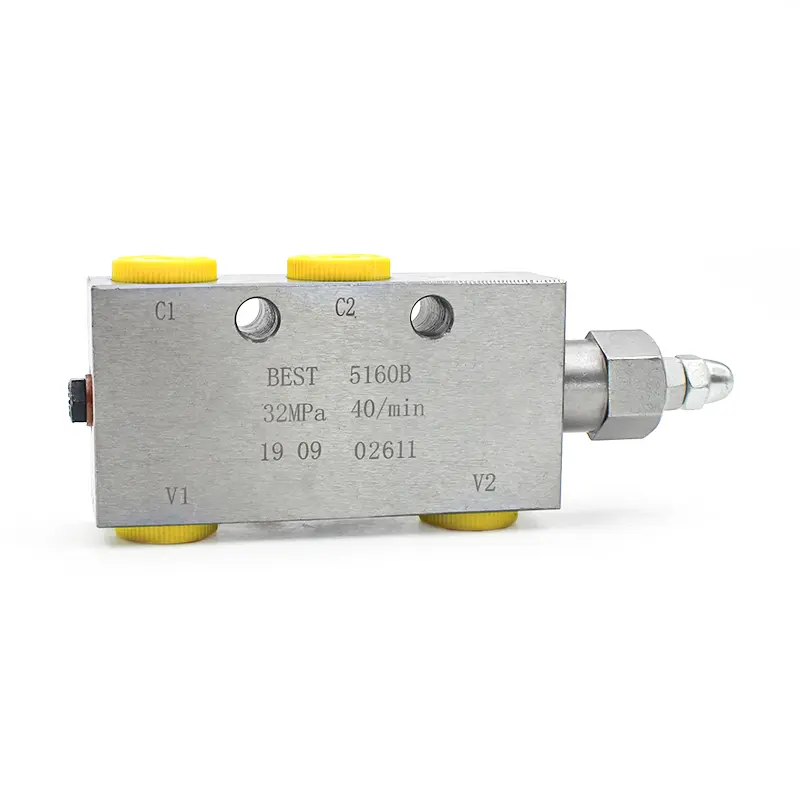
How do pressure control valves work inside? They use a very strong steel spring. You turn a metal screw to tighten the spring. A round pressure gauge helps you see the exact number setting. Once you lock the nut, it delivers a controlled pressure all day long. The spring balances against the pushing oil. If the oil pushes harder than the spring, the internal parts shift. This helps manage sudden changes in the system smoothly and safely.
What role does a check valve play in a hydraulic circuit?
A check valve is the absolute simplest but most vital tool you can buy. These are strict one-way valves. They allow fluid to flow in one path and one path only. They permit the heavy oil to move in a single direction.
If the oil tries to go backward, the tool snaps shut instantly. It acts securely in one direction while preventing dangerous backflow. This backflow is terrible because it can spin an expensive pump backward and shatter its internal gears.
Inside the body, there is usually a small steel ball or a flat poppet. A weak spring holds it closed. When oil pushes the correct way, it easily moves the ball aside. When oil pushes the wrong way, it slams the ball hard into the seat, blocking the pipe completely.
These are heavily used in aerospace planes and heavy earth-moving equipment to hold loads up safely. If the main pump engine suddenly turns off, the oil cannot escape backward. The heavy load stays safely in the air. You must ensure the internal seat is incredibly hard. If the seat wears out, the oil leaks slowly, and the load drops.
How do NPT ports affect fluid flow and valve connections?
Hose connections matter just as much as the internal parts. NPT (National Pipe Thread) is a special tapered thread design. As you screw the NPT steel fitting in, it gets tighter and tighter. This wedges the metal threads together to stop annoying oil leaks.
A port is simply the machined hole where the hose connects. Valves may have very tiny ports or huge, wide ones. The size of the port directly limits the maximum speed of the oil. A tiny 1/4-inch port cannot feed a massive ram quickly enough.
Valves are used in very tight, dirty spaces. In a farm tractor, the hydraulic oil can get extremely hot. The NPT threads handle this heat expansion very well without cracking. However, mechanics must always use white thread sealant tape during assembly.
Different countries use different thread standards. Europe often uses BSPP threads. The USA heavily relies on NPT. If a buyer from Texas buys a European thread by mistake, it will not screw onto his American hoses. He will have to buy messy adapters. If the factory cuts the threads poorly, the part will leak on day one. Always demand strict quality inspections for threads.
How to choose the right control valves in hydraulic systems?
Buying the best control valves in hydraulic systems is a tough, important job. You have hundreds of options. You might look at a famous summit hydraulics hydraulic in-line adjustable unit. Or you might browse a generic hydraulics hydraulic in-line adjustable variable catalog from overseas. How do you actually choose?
First, match the metal to the job. Is it for massive construction machinery? You need a heavy, solid steel body. Is it for a light farm implement? Aluminum might work fine for low pressure tasks.
Second, look for true precision control. Ask the supplier about their factory machining tolerances. A sloppy spool means a leaky machine. A good factory will gladly show you their ISO certificates. Be very careful of certificate fraud. Always verify the paperwork with the issuing agency. You might want to explore dedicated Flow Regulator Valves for your specific machines to ensure quality.
Third, strongly consider logistics. An adjustable variable flow control valve is completely useless if it sits on a cargo boat for six months. Delayed shipments ruin your production schedule. Communicate clearly with sales representatives. If they do not understand simple technical terms like throttle or throttle valves, find a new supplier immediately. They must know exactly how the oil flows and how to properly implement engineering solutions. Sometimes a modular one way flow control valve is better for stacked, tight assemblies.
For applications requiring high flow, always verify the internal pathways. Some cheap parts have a big port on the outside but a tiny internal hole. This chokes the machine. They claim to provide flow control and shut-off, but they just cause heat and friction. Flow restrictors are placed within hydraulic systems globally to solve problems, not cause them. A real adjustable part gives you true, lasting control.
Conclusion
Choosing the best fluid components is crucial for any factory buyer or machine builder. You simply cannot afford to guess when buying parts. By understanding exactly how these tools work, you can buy smarter, negotiate better, and build much better machines.
- Understand the basics: An adjustable variable flow control valve manages cylinder speed and acts as a tough restrictor.
- Know your flow paths: Many valves use smart reverse flow bypasses to speed up cycle times. This gives you control and shut-off in one smooth direction.
- Pick the right threads: NPT connection ports are standard in the US, but the machining must be perfect to prevent costly leaks.
- Manage force: Always use pressure control valves to regulate the maximum pushing force and protect your expensive pumps.
- Check supplier quality: Whether you buy a name brand like the summit hydraulics hydraulic in-line adjustable model or a factory-direct part, always verify their quality control and ISO standards.
- Avoid backflow: Use a durable check valve to maintain flow in one direction and hold heavy loads safely in the air.