How the hydraulic valve spool Functions, How spool valves work
2026-05-22Welcome to the complex, high-stakes world of industrial fluid routing. Have you ever stood on a factory floor and wondered how a massive excavator arm moves with such smooth, effortless grace? Or how a giant metal press stamps heavy steel parts with flawless, repeatable precision? It all comes down to managing the intense, hidden energy of pressurized fluids. Reading this comprehensive guide is highly worth your time because mastering how these internal mechanisms direct raw power will help you prevent sudden, extremely costly factory downtime. You will learn to quickly spot high-quality manufacturing materials, ask the absolute best technical questions during B2B procurement meetings, and keep your production lines moving without getting tricked by untrustworthy suppliers handing out fake certifications. Let us dive deep into the mechanical heart of your heavy machinery.
What Exactly Is a Spool Valve and How Do Spool valves work?
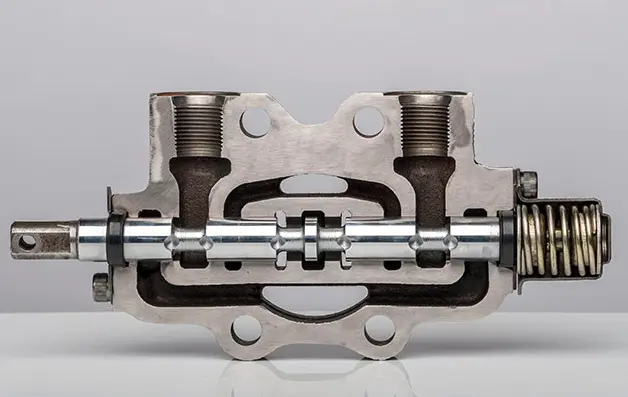
A spool valve is an essential routing device used extensively across heavy machinery, aerospace, and manufacturing platforms worldwide. But what is it, fundamentally? Imagine a precisely machined, cylindrical metal rod sliding back and forth inside a solid, heavy metal block. That sliding metal rod is the spool, and the heavy metal block safely surrounding it is the valve body.
When modern engineers and procurement buyers ask how spool valves work, the answer relies entirely on simple, precise geometry. The sliding metal rod features thick, raised sections called lands, and thinner, recessed sections known as a groove. As the spool slides horizontally within the valve body, the thick lands physically block the pressurized liquid from moving forward. Conversely, the thin sections allow the liquid to freely pass through specific, bored holes. Every individual hole drilled into the block is called a port.
This specific type of valve remains incredibly popular in the industrial sector because it is exceptionally reliable, relatively easy to manufacture at scale, and highly versatile for different layouts. Most basic spool valves have two main jobs: they either open a designated fluid pathway, or they firmly close that pathway. When a unit performs just this basic on-and-off function, it acts as a simple 2-way valve. It is a brilliant, foundational piece of engineering that safely forms the absolute backbone of modern fluid power engineering today.
Why Is the valve spool Critical in a control valve?
The valve spool acts as the absolute, undeniable brain of any control valve setup on your floor. Without this highly sensitive, central moving piece, the violently pressurized liquid would simply crash into a solid wall and go nowhere. The main spool dictates exactly where the machine’s kinetic energy goes. Think of it exactly like an experienced train switch operator safely managing a busy, high-speed rail yard. It actively guides the raw energy down the correct, safe track. By perfectly lining up a machined groove with certain port openings, it safely creates a clear, unobstructed flow path for the liquid or gas to travel freely.
If you want a giant machine to move forward, the internal piece shifts quickly one way. If you desperately want the heavy machine to stop safely, it moves directly to the neutral position. This critical resting spot is also widely known as the center position. In this specific spot, the intense energy is usually blocked entirely, or it is safely returned to the storage tank without doing any dangerous work.
Understanding this movement is extremely crucial for anyone buying expensive replacement parts for a large industrial machine. If the internal piece gets physically stuck due to poor machining tolerances, the whole machine stops working completely, costing your business thousands of dollars per hour. That is exactly why smart factory owners must insist on top-tier machining quality and verified inspection reports from their global suppliers.
How Does a hydraulic valve Direct hydraulic fluid?
A true hydraulic valve is specifically designed to handle extreme, violent pressure safely. When a massive industrial pump pushes thick, heavy oil through rigid steel pipes, that thick oil is the working fluid medium. To make a massive excavator lift a ton of dirt smoothly into the air, you need a highly reliable way to route that heavy oil. The assembled routing unit acts exactly like a heavy-duty traffic cop for the hydraulic fluid.
When the machine operator confidently moves a joystick in the cabin, it shifts the internal mechanism instantly. This simple physical action connects the pump’s raw pressure directly to the correct working port. The oil rushes forcefully through the valve and travels swiftly down the lines to an actuator. This complex routing process is the core daily job of a standard directional control valve. It actively decides the physical direction of the machine’s immense lifting energy.
It capably handles the immense, brutal power of the entire hydraulic system. Without this precise directional routing ability, the hydraulic fluid would simply build up immense back-pressure and violently blow a rubber hose. I see this exact disaster happen quite often when novice buyers purchase cheap, unverified parts with poor manufacturing tolerances. Quality routing ensures absolute safety and smooth operational efficiency on the job site. You can explore some highly reliable routing units by looking at this premium modular one way flow control valve for your next project.
How Do You actuate Hydraulic spool valves?
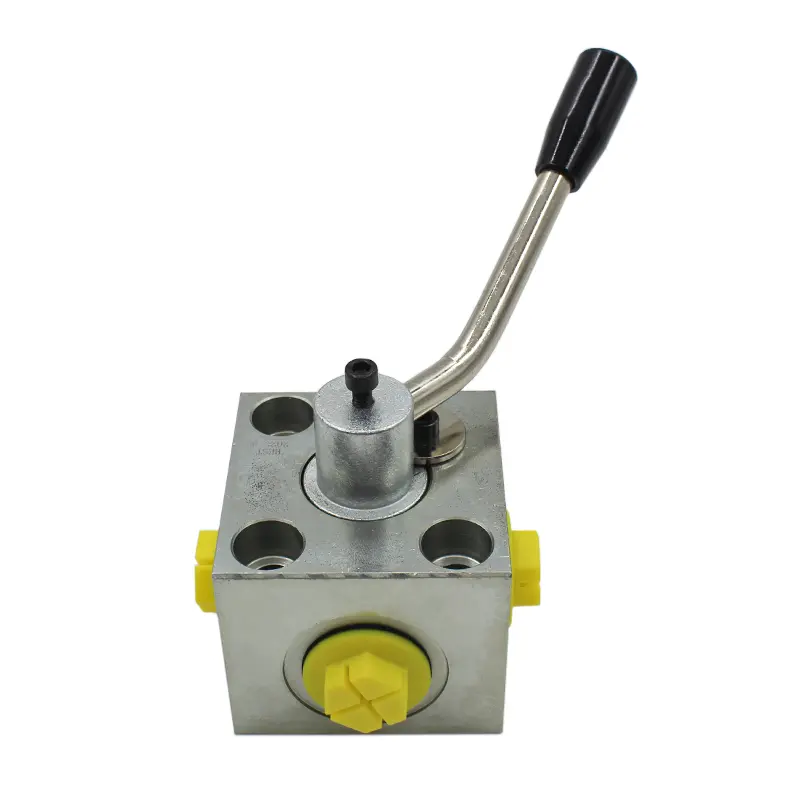
To make these heavy-duty operated valves actually do their assigned job, you have to physically push them. This deliberate pushing action is technically called actuation. So, how do you actually actuate them in the real world? There are several highly effective ways. The oldest and simplest way is using a manual lever. A human worker firmly pulls a handle, and their physical muscle force moves the internal metal rod safely.
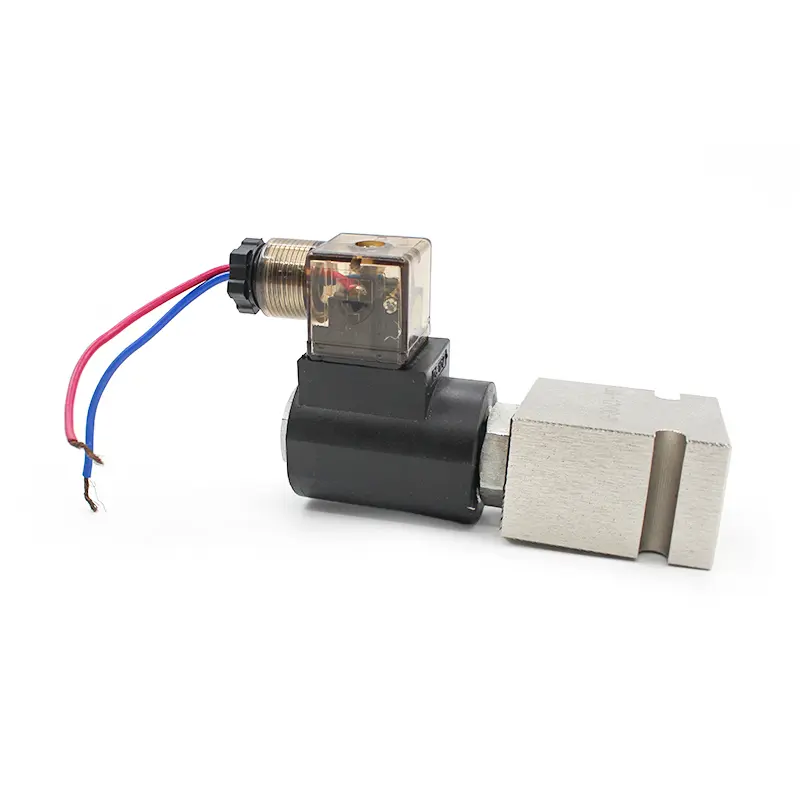
However, in modern industrial automation, you absolutely need lightning speed and perfect computer precision. That is exactly where a solenoid comes heavily into play. A modern solenoid operated unit strictly uses electricity to function. A small electrical control panel sends a fast electrical current to a copper solenoid coil, which instantly creates a strong magnetic field.
This invisible magnetic field violently pulls a small, magnetic plunger, which then physically strikes and pushes the end of the spool. Once the computer turns off the electrical power, a strong internal spring forces everything right back to the starting point. Sometimes, you need to deliberately energize a coil on both sides of the block to forcefully push it back and forth between two positions.
What Role Does the spool Play in flow control?
While we definitely talk a lot about routing direction, we absolutely cannot forget about the concept of regulating the stream. Sometimes you simply do not want to just turn a massive fluid flow fully on or fully off; you want to carefully slow it down. The actual physical shape of the spool can brilliantly manage the machine’s speed. By adding tiny, precise, V-shaped notches to the thick metal lands, the valve can slowly and gently open a port instead of opening it violently all at once.
This gradual, metered opening provides excellent, smooth speed control. If you accidentally send too much pressurized fluid too fast, a giant steel arm might slam dangerously into a concrete wall. By strictly managing the flow of fluid, the unit gently speeds up or slows down the physical movement.
This is absolutely crucial for highly delicate operations, like carefully lowering a heavy steel engine block into a fragile car chassis. It also effectively reduces pressure spikes that can secretly damage the rest of the hydraulic system over time. For holding heavy things incredibly steady, many advanced systems also pair these directional units with a sturdy dual cross-over relief valve to ensure the lifted load never drops unexpectedly.
Are There Differences Between hydraulic and pneumatic spool valves?
Yes, there are massive, foundational differences that every buyer must know. Hydraulic units uniquely deal with heavy, thick oil trapped under massive, crushing pressure. Pneumatic units exclusively deal with fast-moving compressed air. Because ambient air is thin, light, and easily squishy, pneumatics fundamentally requires entirely different engineering designs. A standard pneumatic device usually operates at significantly lower pressures than heavy hydraulics.
In modern pneumatic systems, the valve quickly routes a steady air supply to move lightweight objects incredibly quickly. Because pressurized air leaks very easily through tiny scratches, these lightweight units rely heavily on soft rubber parts, like a tightly fitted o-ring, to keep the invisible air safely trapped inside.
Hydraulic spool valves, on the other hand, rely on incredibly tight, microscopic metal-to-metal fits to block the thick oil. There is a common saying on our factory floor: oil naturally lubricates the metal, but dry air fiercely dries things out. So, whether your factory is actively using air or hydraulic power, the internal materials must perfectly match the fluid. You cannot simply swap them out lazily. A fragile device built only for air will literally explode if you mistakenly pump high-pressure, thick oil into it.
How Does the spool Direct Fluid to a cylinder or motor?
Let us look closely at the actual, physical work being done on the floor. The ultimate goal of the valve is to safely send energy to a working actuator. This destination is usually a straight-moving cylinder or a spinning motor. Imagine a very simple single-acting mechanism. The valve opens the primary inlet path. The pressurized fluid rushes fiercely into the bottom of the cylinder, aggressively pushing a steel rod outward to lift a heavy box.
But what happens if you need to pull that heavy steel rod back? For a more complex, double-acting setup, the directional unit shifts its position again. It intelligently opens a brand new path to safely retract the cylinder. It takes the used fluid pushing on one side and sends it straight back to the holding tank or dumps it out the exhaust.
The central unit might effectively have four ports to handle all this chaotic traffic safely. By meticulously managing the inlet and outlet paths, and actively monitoring the main outlet port, it safely achieves the flawlessly precise movement of the hydraulic actuator. This brilliant setup perfectly handles the complex job of controlling the movement of everything from a factory conveyor belt to the massive, spinning motor of an underground mining drill.
What Happens When a spool valve Fails in the Field?
When a critical control valve suddenly fails, all factory production violently stops. Rapid troubleshooting of these annoying issues is a daily, stressful task for tired maintenance crews. The absolute most common enemy in the field is persistent leakage. If the internal metal parts wear down prematurely from rough fluid abrasion, the pressurized fluid silently sneaks past the lands. Because of this, the spool may slowly drift out of alignment, causing the heavy equipment to dangerously drift downward when it is supposed to hold perfectly still in mid-air.
Another massive, costly issue is a jammed, stuck rod. If the thick hydraulic fluid gets terribly dirty, tiny, invisible metal shavings tightly wedge themselves into the groove. The sliding piece violently jams tight. It simply cannot safely reach its protective center position.
Sometimes, outside water accidentally enters the closed system and causes severe internal corrosion, aggressively rusting the delicate internal parts overnight. If a critical o-ring suddenly fails, messy fluid might leak dangerously out of the exhaust or flood straight into the delicate electrical coil, causing a short circuit. To fix this mess, workers have to painfully tear down the entire valve body, replace the broken seal, and flush the entire massive system. Buying premium parts directly from a verified, trusted oem heavily helps prevent these sudden, incredibly expensive factory disasters.
| Symptom | Potential Cause | Immediate Action |
|---|---|---|
| Slow Actuator Movement | Pump failure or severe leakage | Check system pressure immediately |
| Sticking or Jamming | Dirty fluid medium or abrasion | Flush fluid, check for corrosion |
| No Movement | Blown solenoid coil | Test electrical control panel |
"Quality is not just about a shiny finish; it is about the microscopic tolerances that keep your machines running smoothly year after year."
How Do You Choose the right spool for Your machine?
For decisive B2B buyers who demand excellent quality, choosing the absolutely right spool is entirely about perfectly balancing cost and absolute, undeniable reliability. You desperately want precise control without foolishly overpaying for unnecessary features. First, deeply analyze your facility’s exact needs. Are you actively running a highly demanding, high-speed cardboard packaging line? You probably need a very fast, lightweight pneumatic cylinder setup. Are you building a massive, heavy-duty metal stamping press? You absolutely need thick, forged hydraulic components that will not crack under stress.
Pay incredibly close attention to the delicate transitional state of the unit you are purchasing. When the unit actively shifts from left to right, does it momentarily block absolutely all the ports tight, or does it safely let a little bit of fluid bleed through within the valve? A completely closed transitional state might accidentally cause a nasty, pipe-bursting pressure spike. An open transition might cause a suspended load to momentarily dip slightly.
You also absolutely need to properly match the system pressure rating. Do not ever buy a cheap unit rated for only 1000 PSI if your massive pump aggressively pushes 3000 PSI all day. When sourcing at international exhibitions, make absolutely sure the foreign factory provides real, verifiable metallurgical testing certificates. If you desperately need a highly robust setup for directly controlling complex sequences, exploring high-quality direct acting sequence valves or a heavy-duty high pressure 3 ways diverter valves, steel body is a brilliant, money-saving procurement move for your business.
Key Takeaways for Procurement Officers
Here is a rapid summary of the most important things to remember when sourcing these fluid control components for your business:
- Core Function: The spool acts as the central brain of the unit, meticulously blocking or opening specific pathways to direct intense energy where it is needed most.
- Fluid Differences: Never mix up your applications. Hydraulic units manage thick, heavy oil, while pneumatic units handle fast, compressed air. The seals and metal tolerances are entirely different.
- Safety First: The center position is an incredibly critical feature for safely stopping a machine or locking a heavy load firmly in place during a sudden power emergency.
- Actuation Methods: Depending on your factory’s exact needs, these units can be shifted manually by hand or instantly controlled by an electrical solenoid for high-speed, modern automation.
- Quality Matters: A poorly machined valve will quickly suffer from rapid abrasion, leading to dangerous leaks, jammed parts, and incredibly expensive production downtime. Always demand verified testing certificates.